DonateMembershipVisit Heritage
  • Tūrangawaewae
    Places
  • Tira Māori
    Māori Heritage
  • Poutairangahia
    Archaeology
  • Rauemi
    Resources
  • Mō Tātou
    About Us
  • New Zealand Heritage List
  • Nominate and submit
  • Explore the List
  • National Historic Landmarks
  • Plaques
  • Rainbow List Project
  • Lost heritage
  • Visit Heritage
  • Our properties
  • Turnbull House Project
  • Collections
  • Shop
  • Tohu Whenua
  • Tira Māori
  • Conserving Māori heritage
  • Marae built heritage
  • Māori heritage on the List
  • Hinemihi—Te Hokinga Mai
  • What is archaeology?
  • Is there a site on my property?
  • What are my legal requirements?
  • Affecting an archaeological site
  • Declaring an archaeological site
  • Archaeology FAQs
  • Archaeology Digital Library
  • Archaeology guidelines and templates
  • Resources
  • Funding
  • Publications
  • Sustainable management guides
  • Disaster recovery
  • Podcasts & digital resources
  • Education Hub
  • Conservation plans
  • About
  • Board
  • Māori Heritage Council
  • Senior Staff
  • Offices
  • Contact us
  • Careers
  • Covenants
  • Fast-track
  • Corporate documents
  • Currently consulting on
  • Our submissions
  • News
  • Covid-19 response
Quick links
Rārangi Kōrero | The List
Explore the List
National Historic Landmarks
Ngā Manawhenua o Aotearoa me ōna Kōrero Tūturu
Quick links
Tapuwae
A Vision for Places of Māori Heritage
Funding for Māori Heritage
Resources
Quick links
Archaeological Authority Portal
Applying for an archaeological authority
Archaeology FAQs
Browse the most frequently asked questions about archaeological authorities and the archaeological process.
Quick links
Quick links
News
News Keep up to date with Heritage New Zealand Pouhere Taonga
Membership
Membership Find out more and sign up today
DonateMembershipVisit Heritage
  • Tūrangawaewae
    Places
  • Tira Māori
    Māori Heritage
  • Poutairangahia
    Archaeology
  • Rauemi
    Resources
  • Mō Tātou
    About Us
  • New Zealand Heritage List
  • Nominate and submit
  • Explore the List
  • National Historic Landmarks
  • Plaques
  • Rainbow List Project
  • Lost heritage
  • Visit Heritage
  • Our properties
  • Turnbull House Project
  • Collections
  • Shop
  • Tohu Whenua
  • Tira Māori
  • Conserving Māori heritage
  • Marae built heritage
  • Māori heritage on the List
  • Hinemihi—Te Hokinga Mai
  • What is archaeology?
  • Is there a site on my property?
  • What are my legal requirements?
  • Affecting an archaeological site
  • Declaring an archaeological site
  • Archaeology FAQs
  • Archaeology Digital Library
  • Archaeology guidelines and templates
  • Resources
  • Funding
  • Publications
  • Sustainable management guides
  • Disaster recovery
  • Podcasts & digital resources
  • Education Hub
  • Conservation plans
  • About
  • Board
  • Māori Heritage Council
  • Senior Staff
  • Offices
  • Contact us
  • Careers
  • Covenants
  • Fast-track
  • Corporate documents
  • Currently consulting on
  • Our submissions
  • News
  • Covid-19 response
Quick links
Rārangi Kōrero | The List
Explore the List
National Historic Landmarks
Ngā Manawhenua o Aotearoa me ōna Kōrero Tūturu
Quick links
Tapuwae
A Vision for Places of Māori Heritage
Funding for Māori Heritage
Resources
Quick links
Archaeological Authority Portal
Applying for an archaeological authority
Archaeology FAQs
Browse the most frequently asked questions about archaeological authorities and the archaeological process.
Quick links
Quick links
News
News Keep up to date with Heritage New Zealand Pouhere Taonga
Membership
Membership Find out more and sign up today
  • Places
  • Nominate and submit
  • National Historic Landmarks
  • Places
  • Nominate and submit
  • National Historic Landmarks
  • Tira Māori
  • Conserving Māori heritage
  • Marae built heritage
  • Tira Māori
  • Conserving Māori heritage
  • Marae built heritage
  • Archaeological authorities
  • Archaeology Digital Library
  • Archaeological authorities
  • Archaeology Digital Library
  • All resources
  • Publications
  • Funding
  • All resources
  • Publications
  • Funding
  • FAQs
  • FAQs
Follow us on:
Places
  • Places
  • Nominate and submit
  • National Historic Landmarks
Tira Māori
  • Tira Māori
  • Conserving Māori heritage
  • Marae built heritage
Archaeology
  • Archaeological authorities
  • Archaeology Digital Library
Resources
  • All resources
  • Publications
  • Funding
FAQs
  • FAQs
Follow us on
HomePrivacyTerms and conditionsAbout this site
© Heritage New Zealand Pouhere Taonga 2026.
 
Te Maharatanga Pakanga o te Motu National War Memorial

Pukeahu National War Memorial Park, 19 Buckle Street, WELLINGTON

National Historic Landmark

List No. 10002

Quick links:
List GalleryLocationDetails
KO TE MAHARATANGA PAKANGA O TE MOTU KI PUKEAHU TĀ AOTEAROA WHAKAMAUMAHARATANGA KI A RĀTOU I RANGATIRA TE HINGA I NGĀ PAKANGA KI TĀWĀHI ME NGĀ MAHI HOHOU I TE RONGO KI REIRA.

Koia tēnei, te puna whakahoki mahara o te motu, te arotahinga pū o ngā maumahara a ngā whakatupuranga heke, heke noa.

Ko Te Maharatanga Pakanga mātāmua tēnei o te motu e whaimana nui nei i ōna kōrero tūturu o nehe, i tōna uara ahurea, i ōna taonga anō hoki. Ka hangaia mai tēnei whakamaumaharatanga nui i muri mai i Te Pakanga Nui o te Ao Tuatahi, i runga i te kaha hiahia a te motu whānui kia whakapūtahitia ngā maumaharatanga whakatiketike i te hunga i hinga ki te pae o te riri. Ko tā Aotearoa kōkiri i ōna anō kōrero pakanga i hangaia ai pērā me ērā whakamaumaharatanga pakanga i puāwai mai huri noa o te ao i te rautau rua tekau. Kitea ai te tuakiri o te motu i tōna hanganga tonu me ngā tini āhua whakamaumaharatanga ka whakahaerehia ki reira.

Ko Te Maharatanga Pakanga o te Motu he wāhi whakahirahira hei whakaū i te whanaungatanga ki whenua kē. Arā, ka tae manuhiri mai te tokopae rangatira o tāwāhi ki ngā hui whakamaumahara, ki te whakatakoto puāwai whakamaumahara. He wāhi huihuinga mātāmua rawa mō ngā rangatira o te ao, e kitea whānuitia ai a Aotearoa nui tonu e te ao katoa.Ko te whakamaumahara me te whakamānawa i te hunga hinga pakanga he āhuatanga e whakapakari haere nei i tā Aotearoa whanaungatanga ki ngā tōpito o te ao whānui.

E toru ngā momo hanganga o Te Maharatanga Pakanga o te Motu i hua wā kē mai: te Kāhui Pere o Te Maharatanga Pakanga, tōna arawhata me te torotīnga wai i oti mai te hanga i te tau 1932; te Hōro Whakahoki Mahara i oti ake i te tau 1964; me te Toma o te Toa Matangaro i whakatauria ki reira i te tau 2004. He mea āta waihanga tōna hangarite whakahirahira e tētehi tino uepū hoahoa whare i Aotearoa, arā, ā Gummer and Ford. Kei te kaha manaaki mai te pīereere ‘ora nei’ o te Kāhui Pere i te āhua whakamīharo o te whakamaumaharatanga me ōna karapotinga. Koia te kāhui pere nui tuatoru o te ao, ā, e mōhiotia whānuitia ana huri noa i te ao te rōreka o tōna reo whakaaraara. Kei reira anō hoki ngā pōhutukawa whakamaumahara.

THE NATIONAL WAR MEMORIAL AT PUKEAHU IS NEW ZEALAND’S STATE MONUMENT TO THOSE WHO HAVE SERVED AND FALLEN IN OVERSEAS WARS AND PEACEKEEPING OPERATIONS.

The country’s foremost living symbol of national and personal remembrance and reflection, it is the focal point of generations of memory.

As New Zealand’s pre-eminent place for war commemoration, in a landscape of great cultural and historical significance, the National War Memorial is of outstanding historical, cultural, and physical heritage value. The building of this major civic monument after the First World War is our country’s most prominent response to the powerful social need for a place to honour and remember our war dead. It is New Zealand’s national expression of a movement of war memorial creation that occurred globally during the twentieth century. Our national identity is reflected in this memorial, not only through its architecture and the events it commemorates but also in the ways we collectively demonstrate our remembrance there.

The National War Memorial is also a very important site for international relationships, where numerous visiting dignitaries lay wreaths and attend commemoration ceremonies. It is a key site in the itineraries of state visits and a place where New Zealand presents itself to the world. The remembrance and honouring of war dead strengthens our global connections.

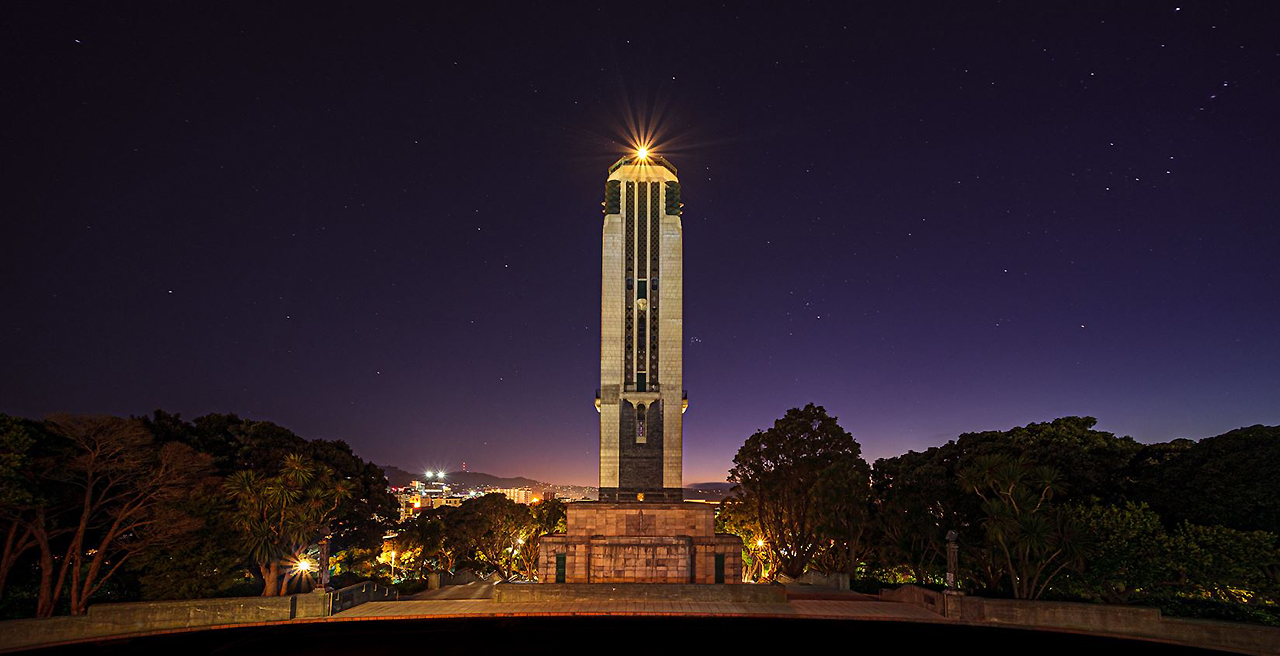
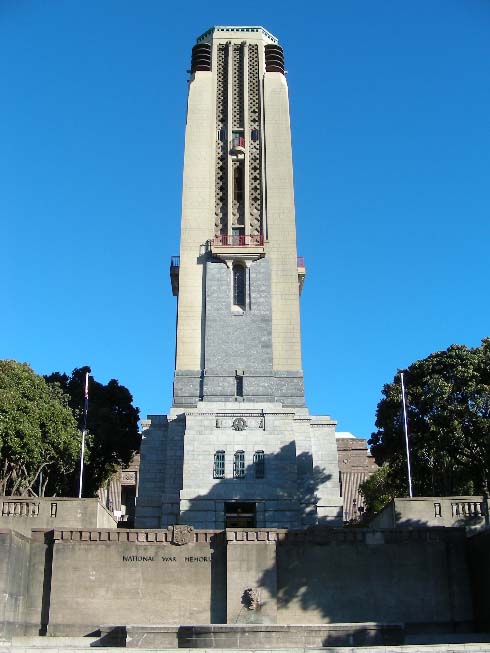
The National War Memorial consists of three inter-related structures from different eras: the National War Memorial Carillon with steps and fountain, completed in 1932; the Hall of Memories, completed in 1964; and the Tomb of the Unknown Warrior, installed in 2004. The striking and coherent symmetrical composition was designed by one of New Zealand’s most prominent architectural firms, Gummer and Ford. The powerful aesthetic impact of the memorial and its surroundings is enhanced by the ‘living’ sonic element contributed by the Carillon–the third largest musical instrument of its type in the world, technologically significant internationally for its acoustic quality–and the many memorial pōhutukawa trees.
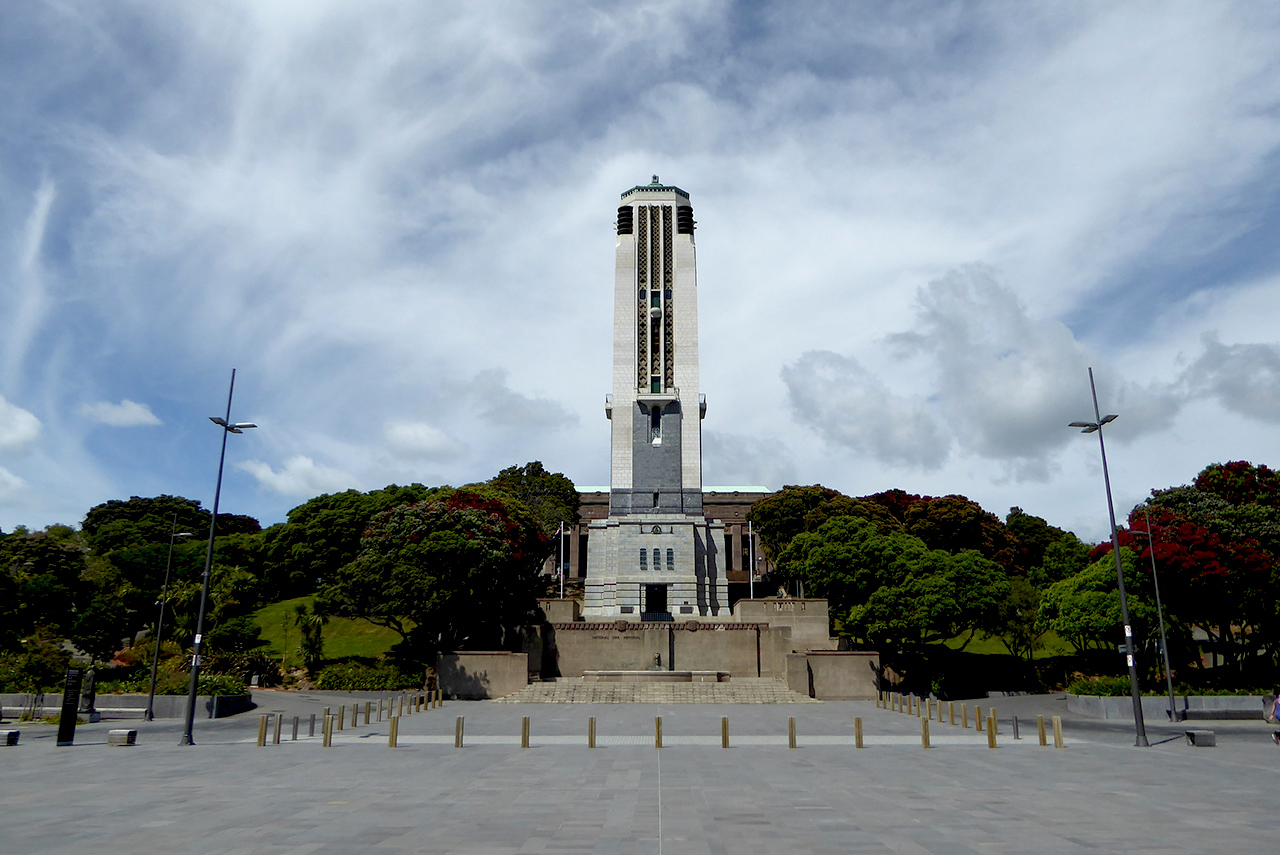
Te Maharatanga Pakanga o te Motu National War Memorial, Wellington. Carillon, steps, and fountain CC BY-NC 2.0 Image courtesy of www.flickr.com | duncan cumming | 07/01/2017 | duncan cumming
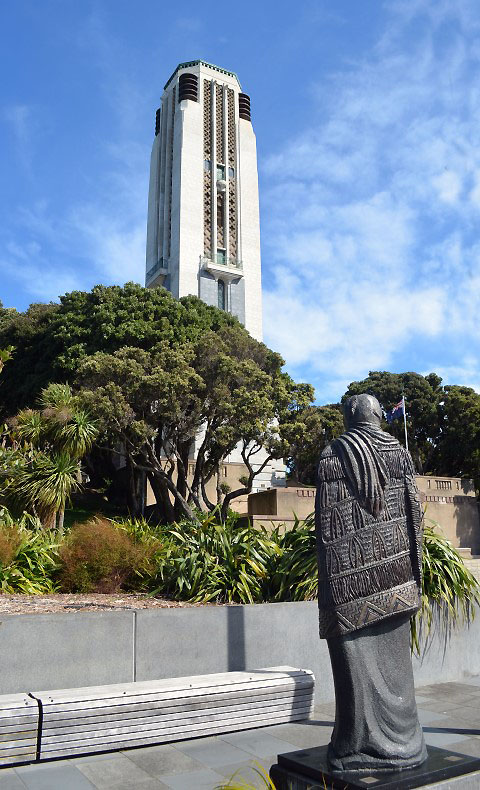
Te Maharatanga Pakanga o te Motu / National War Memorial, Wellington. Hinerangi Sculpture by Darcy Nicholas | 12/09/2019 | Heritage New Zealand Pouhere Taonga
Te Maharatanga Pakanga o te Motu National War Memorial, Wellington. Image courtesy of www.flickr.com | Andrew Caldwell | 13/07/2019 | Andrew Caldwell
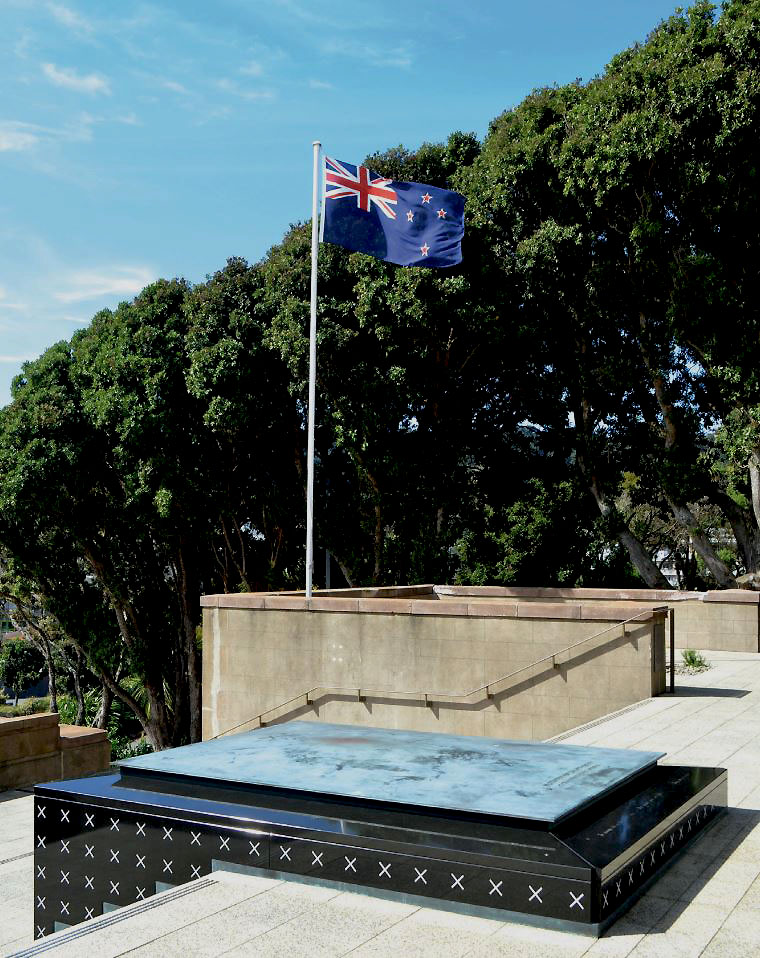
Te Maharatanga Pakanga o te Motu / National War Memorial, Wellington. Tomb of the Unknown Warrior | 11/09/2019 | Heritage New Zealand Pouhere Taonga
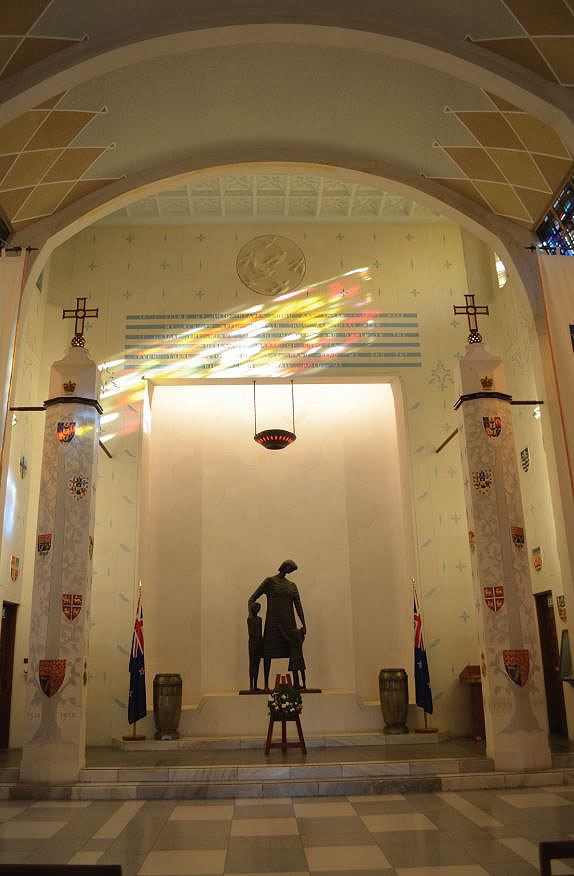
Te Maharatanga Pakanga o te Motu / National War Memorial, Wellington. Hall of Memories, interior | 17/04/2019 | Heritage New Zealand Pouhere Taonga
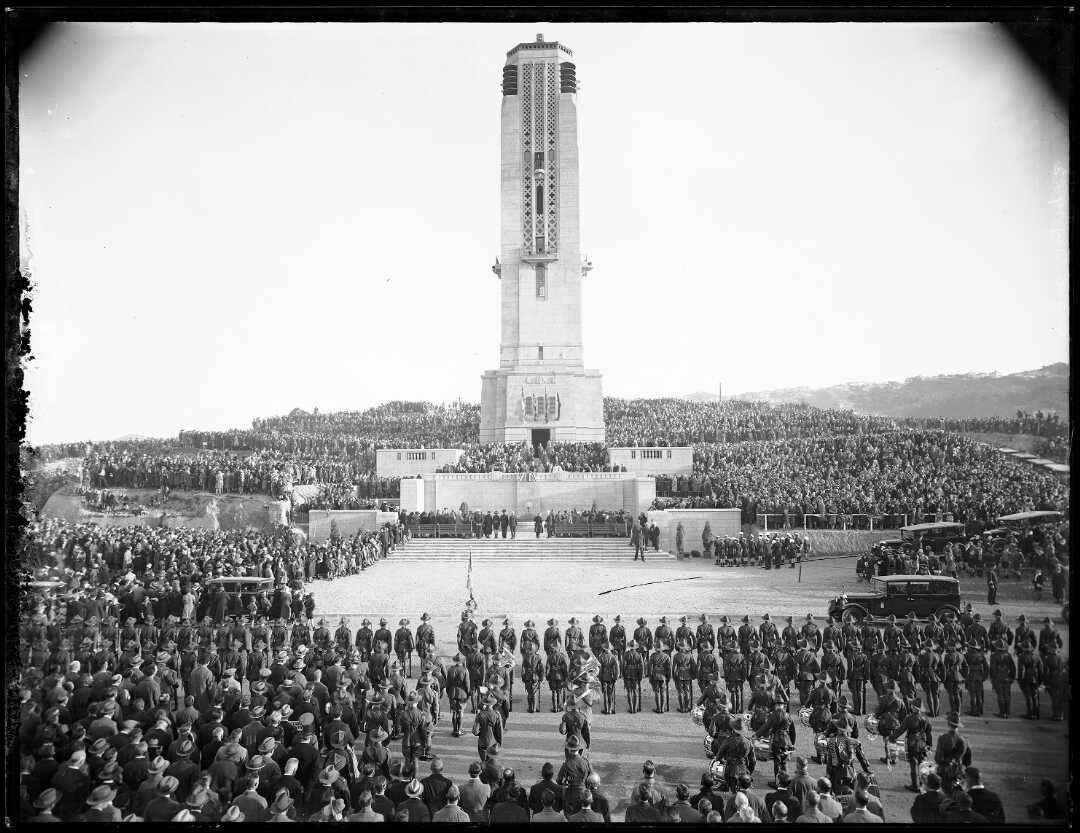
Te Maharatanga Pakanga o te Motu / National War Memorial, Wellington. The dedication of the National War Memorial Carillon, in Wellington on Anzac Day 1932 ATL Ref: 1/1-018026-G | William Hall Raine | 25/04/1932 | National Library NZ on The Commons Flickr - Public Domain
Te Maharatanga Pakanga o te Motu National War Memorial, Wellington. Carillon, steps, and fountain CC BY-NC 2.0 Image courtesy of www.flickr.com | duncan cumming | 07/01/2017 | duncan cumming
Te Maharatanga Pakanga o te Motu / National War Memorial, Wellington. Hinerangi Sculpture by Darcy Nicholas | 12/09/2019 | Heritage New Zealand Pouhere Taonga
Te Maharatanga Pakanga o te Motu National War Memorial, Wellington. Image courtesy of www.flickr.com | Andrew Caldwell | 13/07/2019 | Andrew Caldwell
Te Maharatanga Pakanga o te Motu / National War Memorial, Wellington. Tomb of the Unknown Warrior | 11/09/2019 | Heritage New Zealand Pouhere Taonga
Te Maharatanga Pakanga o te Motu / National War Memorial, Wellington. Hall of Memories, interior | 17/04/2019 | Heritage New Zealand Pouhere Taonga
Te Maharatanga Pakanga o te Motu / National War Memorial, Wellington. The dedication of the National War Memorial Carillon, in Wellington on Anzac Day 1932 ATL Ref: 1/1-018026-G | William Hall Raine | 25/04/1932 | National Library NZ on The Commons Flickr - Public Domain

List Entry Information

Overview

Status
Listed

List Entry Status
National Historic Landmark

Access
Unknown

List Number
10002

Date Entered
22nd May 2025

Date of Effect
15th August 2025

City/District Council
Wellington City

Region
Wellington Region

Extent of List Entry

The extent includes the land described as Pt Sec 1266 Town of Wellington (RT WN49D/144), Wellington Land District, and the structures associated with the National War Memorial including: the National War Memorial Carillon, the Hall of Memories, the Tomb of the Unknown Warrior, the grand staircase descending in stages down the hill to the north that includes the lion’s head fountain, and the immediate landscape plantings surrounding these built elements. The heritage values of the wider site may be considered in the future.

Legal description

Pt Sec 1266 Town of Wellington (RT WN49D/144), Wellington Land District

Detailed List Entry
What Makes The Place

HE AHA I PAI AI TĒNEI WĀHI | WHAT MAKES THE PLACE Nā Ngāi Tara te ingoa ‘PUKE-AHU’ i tapa ki te puke e tū mai rā i waenga i ngā manga wai o Waitangi me Waimāpihi. ‘Puke-ahu’ – arā, ‘ahunga tapu’, tūāhu rānei – tērā pea he urupā, he wāhi tapu rānei hei wāhi whakahaere kawa. Ka taka te wā ka noho tēnei wāhi whakahirahira ki raro i te maru o ngā iwi o Taranaki. Ko ngā manga wai, ā rātou wāhi kohinga kai me ngā māra i toro noa atu ki ngā tahataha puke, me te pā o Te Aro i te whanga. Kei te whakanuia Ngā Tapuwae o te Kāhui maunga i roto i ngā kāri o raro iho i te ara heke o Te Puna Mahara Pakanga o te Motu. Kei reira ngā kāmaka rahi nō maunga Taranaki, Ruapehu me Tongariro i tuhiwhaohia hei whakamārama kau ake i ngā hononga whakapapa ā-iwi o te mana whenua o Te Ātiawa, ā, kei reira hoki te whakapakoko Hinerangi a Darcy Nicholas hei kuia tangi hotuhotu i ngā aneatanga o te pakanga. Ngāi Tara gave the name PUKEAHU to the hill rising between the Waitangi and Waimāpihi streams. ‘Pukeahu’ – ‘sacred mound’ or tūāhu – may have been a burial site or spiritual place for ritual. It became an important feature of the ancestral landscape of Taranaki iwi, with streams, food-gathering sites and cultivations stretching down the surrounding slopes to Te Aro Pā at the harbour. Ngā Tapuwae o te Kāhui Maunga – the footsteps of the ancestors – are acknowledged in the gardens below the steps of the National War Memorial, where engraved boulders from Taranaki, Ruapehu and Tongariro maunga reflect tribal relationships of mana whenua Te Ātiawa, and Darcy Nicholas’ sculpture Hinerangi mourns the damage caused by war. Neke atu i te 50,000 te tokopae tāngata ka tau ki runga i ngā tahataha o Pukeahu i te Rā Whakamahara ki ngā Hōia o Aotearoa me Ahitereiria i te tau 1932 ki te mātakitaki i a Kāwanatianara Rōre Bledisloe e HURA ana i te Kāhui Pere o Te Maharatanga Pakanga o te Motu. Nō muri mai i ngā whaikōrero me te karakia ka pīereere te reo tangi o te Kāhui Pere hei reo mō te tini tāngata i reira i taonga ai tēnei puoro whakahirahira. Crowds of more than 50,000 people blanketed the slopes of Pukeahu on Anzac Day 1932 to witness the DEDICATION of the National War Memorial Carillon by Governor-General Lord Bledisloe. After speeches and the formal service, a poignant song from the Carillon rang out, the instrument ‘a spontaneous and ready gift of the people’, and an embodiment of their voices. Kei te HŌRO WHAKAHOKI MAHARA, kei raro tonu iho i te Kāhui Pere, ngā Ingoa Hōia Whakatiketike o te motu e pupuru ana. Kei roto i ēnei pukapuka ngā ingoa hōia o Aotearoa, tāne mai, wāhine mai me ngā Kaumoana, tata ki te 30,000 i riro i a Tū-Ka-Riri. Hei whare karakia hoki taua hōro.Kei te whakamarutanga te whakapakoko a Lyndon Smith, arā, ā ‘Mother and Children’ e whakaari mai ana i te aroha tauawhi tētehi i tētehi i te wehenga o ētehi o te whānau ki tāwāhi hei hōia. Kei ngā arearenga o te whakamarutanga ngā tohu whakamaumahara ki ngā Hōia a Tū me ngā Kaumoana, ā, kei runga ake ō rātou haki e iri ana. He mea āta waihanga ngā matapihi ōpure kei runga rawa o ngā arearenga e Pierre Fourmaintraux, he tangata e mōhiotia whānuitia ana mō tōna tohungatanga ki te whakamahi i te dalle de verre peita kore, arā, he pākarukarunga karaihe mātotoru ka paopaoa ki te hama, ā, ka totoka i rō raima. The HALL OF MEMORIES, adjoining the Carillon, houses the nation’s Roll of Honour. Within these books are the names of the nearly 30,000 New Zealand servicemen and women, and Merchant Navy seafarers, killed in war. The Hall is also the memorial’s chapel. Lyndon Smith’s statue ‘Mother and Children’ is in the sanctuary, depicting a family giving one another comfort and hope in the absence of loved ones serving their country overseas. In the recesses in the sanctuary are plaques of remembrance dedicated to Armed Services and the Merchant Navy, with flags for each hanging above. The stained glass windows above the recesses were designed by Pierre Fourmaintraux, known for his skilled use of unpainted dalle de verre, thick chunks of glass faceted by hammer and set in concrete. Ko te KĀHUI PERE te pūtahitanga mau aro o Te Maharatanga Pakanga. E 51 mita te tiketike o tōna pourewa huatau e hau ai te rongo o ōna pere 74, huri noa i Te Whanganui a Tara.He ingoa tō ia pere, ā, kua tuhi whakairohia ki te kupu whakamahara. He maha nā ngā whānau ki ngā hōia i hingahinga ki te mura o te ahi i te Pakanga Tuatahi.Whakatangihia ai te Kāhui Pere ki te papa patooro mā ngā ringa me ngā wae o te kaiwhakatangi pere. The CARILLON is the centrepiece of the National War Memorial, with its elegant 51-metre-high tower soaring above Pukeahu, and the music of its 74 bells regularly ringing out over the city. Each bell has a name and is inscribed with a specific dedication, many to First World War casualties from their families. The Carillon is played using a keyboard which the carillonist plays with their hands and feet. Ko te TOMA O TE TOA MATANGARO hei whakamaumaharatanga mō te motu i ngā tāngata katoa o Aotearoa kīhai rawa i hoki mai i ngā pae riri o tāwāhi. He tokopae o Aotearoa kei a Papatūānuku, kei a Tangaroa rānei o tāwāhi e moe mai ana. He tata ki te hautoru o tērā hunga mate kāore i te mōhiotia ko whea e nehu mai ana. Nō te Rā Rangaawatea 2004 i nehua ai te Toa Matangaro o Aotearoa ki mua i te Kāhui Pere, whai muri iho i tōna whakahokitanga mai i Longueval, Wīwī ki Mārakiraki, arā, te wāhi i hemo ai ia i te Pakanga Tuatahi. The TOMB OF THE UNKNOWN WARRIOR is New Zealand’s symbol of remembrance for all New Zealanders who did not make the journey home after serving their country overseas. Many remain buried in foreign soil or at sea. Almost one-third have no known grave. On Armistice Day 2004, New Zealand’s Unknown Warrior was interred in front of the Carillon after having been brought home from Longueval, northern France, where he died during the First World War. Ko te Puna Mahara Pakanga o te Motu he tino whare pouhere tuku iho i ōna KŌRERO TŪTURU O NEHE ME TE AHUREA TUAKIRI Ā-MOTU. Hei kaupapa tautoko tōna whakatūnga ki tētehi wāhi kua roa nei e nōhia ana e te hunga hōia me te hunga pei ā-hara. He whakaaranga mahara o tēnei huihuinga kāinga i mua kei ēnei wāhi pātata, te Mt Cook Police Barracks me te Tasman Street Wall, i hangaia ai ki ngā pereki i mahia mai i rō whare herehere, ki ngā toenga o te whare whaimana nei, te General Headquarters Building o Te Ope Kātua o Aotearoa me ngā toenga tuku iho o te whare herehere tawhito, o ngā whare hōia me te nohonga ake o te Māori i mua. Hei tuarā whakahī mō te puna mahara nei ko te Whare Taonga o Aotearoa o mua me te Whare Whakairi Toi o Aotearoa o mua, nā Gummer and Ford tonu i whakamahere mai. Kei te kōtihinga o te puke tētehi whakamaumaharatanga mō ngā tūpuna o Parihaka i mauheretia ki te whare herehere o reira i te tau 1879. I reira ka kitea ngā taputapu, ka rangona hoki ngā kōrero i ngā huinga ōkawa hei whakamānawa, hei whakaū i ngā hononga mana whenua o Te Ātiawa iwi taketake ki Pukeahu. The National War Memorial is central in a significant HISTORICAL AND CULTURAL LANDSCAPE. Its location in an area long associated with military and law enforcement enhances the memorial’s purpose. Reminders of this neighbourhood’s past exist in the nearby Mt Cook Police Barracks and Tasman Street Wall, built with prison-made bricks, the Defence Force’s historic General Headquarters Building, and the archaeology of the former gaol, military buildings, and Māori inhabitation. The memorial’s grand backdrop is formed by the Dominion Museum and National Art Gallery building, also part of Gummer and Ford’s original design. A memorial to prisoners from Parihaka, who were held at the former gaol in 1879, sits on the crest of the hill. The deep spiritual and cultural connections of Te Ātiawa to Pukeahu are reflected in physical elements of the place and woven throughout ceremonial occasions. Ko ngā RĀKAU PŌHUTUKAWA o runga o Pukeahu he tohu whakamaumahara ora nei e ruruku ai te ngākau ki rō puna ahurea, ki rō puna wairua, ki rō puna mahara tonu. E ai ki te pūrākau a ngā tūpuna, ko ngā puāwai whero hei tohu i te toto o te toa nei, ā Tāwhaki, arā, hei tohu mō te tīmatanga ake me te mutunga iho o te oranga tangata. He maha tonu o tēnei tino rākau o Aotearoa i toua huri noa o Te Puna Mahara Pakanga i te tau 1936 hei whakamaumaharatanga ki ngā Kaumoana hinga mai o te HMS Philomel. Nō muri i te Pakanga o te Ao Tuarua, ka toua ētehi atu anō e Te Ātiawa hei tohu mai i ngā honohononga ki ngā tūao o Te Moana Nui a Kiwa, nā rātou nei i whawhai i te taha o te Ope Māori Rua Tekau Mā Waru. Nō te hūnukutanga iho o te Whare Taonga o Aotearoa i Pukeahu ki Te Papa Tongarewa i te takutaimoana i te tau 1995, he 11 rā e āta hūnuku haere ana ngā kaumātua i tētehi o ngā rākau pōhutukawa kia toua ki reira hei kaitiaki ā-wairua nei mō ngā taonga a te motu. PŌHUTUKAWA TREES on Pukeahu hill are living memorials with deep cultural, spiritual and symbolic meaning. In Māori mythology the red flowers represent the blood of the warrior Tāwhaki, the trees a potent symbol connecting the beginning and ending of human life. Many of these New Zealand icons were planted around the National War Memorial in 1936 as memorials to the Navy casualties of the HMS Philomel. After World War Two, Te Ātiawa planted more pōhutukawa to commemorate the strong connections forged with the Pacific Island volunteers who fought with the 28th Māori Battalion. When the Museum of New Zealand moved from Pukeahu to Te Papa Tongarewa on the waterfront in 1995, kaumātua spent 11 days carefully moving one of the pōhutukawa to be replanted at the new site as a spiritual guardian for the nation’s taonga. Nō te tau 2015 ka hono tahi Te Maharatanga Pakanga me te PAPA WHAKAMAHARATANGA PAKANGA O PUKEAHU hei puna ruruku mahara kia rongo ai te ngākau i te weriweri mai o te pakanga me ngā painga o te tatau pounamu e hua ake ai tō tātou tuakiri ā-motu me ō tātou wawata kia hora te marino maungārongo ki runga i te whenua. Hei kaupapa tautoko te Papa Whakamaharatanga Pakanga i tōna whakaaranga mahara i te pānga mai o ngā āhuatanga pakanga ki ō Aotearoa tāngata, tae atu ki te pakanga nui o tēnei whenua tonu, arā, Ngā Pakanga o Aotearoa. Kei reira hoki ētehi whakamaumaharatanga o whenua kē i tata mai ki a tātou i te muranga o te ahi. Ko te hanganga mai o te papa whakahaere kawa te whakatinanatanga ake o te wawata matapae a Gummer and Ford, ā, nā konā i mana ai a reira hei wāhi hui ōkawa ka whakatairangatia ai hei tino whaitua huinga whakahoki mahara mō Aotearoa whānui. In 2015, the National War Memorial was incorporated into PUKEAHU NATIONAL WAR MEMORIAL PARK, the nation’s place to remember and reflect on this country’s experience of military conflict and peacekeeping and how that shapes our ideals, our sense of national identity, and our desire for a world at peace. The park enhances the National War Memorial’s purpose by commemorating New Zealanders’ experience of all armed conflicts, including those on our own soil, such as the devastating New Zealand Wars. It also contains memorials from other countries with which New Zealand has a close military relationship. The building of the park realised the ceremonial plaza of Gummer and Ford’s original vision, and elevated the National War Memorial’s central role in national commemorative events.

Why It Matters To Us

NGĀ TAKE E WHAI PĀNGA ANA KI A TĀTOU | WHY IT MATTERS TO US HEI TINO PUNA RURUKU MĀ Ō TĀTOU NGĀKAU TE MAHARATANGA PAKANGA O TE MOTU, E MUIMUIA NEI E TE RAU TINI TĀNGATA IA RĀ O NGĀ HŌIA KIA POROPOROAKINA TE HUNGA KUA HŪMENE KI TUA ME TE WHAKAAROARO I NGĀ NGAUKINO PĀMAMAE O NGĀ PAKANGA. Nā te manako a mātinitini o Aotearoa kia kaha hokihokia ēnei hui whakamaumahara i eke ai tēnei o ngā whakamaumaharatanga ki tōna taumata mō te motu. Kāore e ārikarika te hokinga mai o te kaupapa me te tāngata i mana ai a reira. Hei whakaaweawe Te Maharatanga Pakanga i ngā whakatupuranga maha kia wānangahia ngā kōrero tūturu o nehe me te whātoro ō te ngākau ki ngā āhuatanga o mua i pēnei ai a Aotearoa o nāianei. A POWERFUL FOCAL POINT OF COLLECTIVE MEMORY, THE NATIONAL WAR MEMORIAL IS WHERE THOUSANDS GATHER ON ANZAC DAY EACH YEAR TO ACKNOWLEDGE THOSE WHO HAVE PASSED, AND REFLECT ON THE IMPACTS OF WAR. New Zealanders’ continued attendance and immersion in these commemorative events demonstrates the culture of respect and ceremony that this monument represents at a national level. The commanding and elegant design of the place reflects its mana. The National War Memorial inspires people of all ages to engage with history, and explore personal connections to events that have had a major influence on the nation we are.

Reference
Further Information

Current Usages

Former Usages

Themes

Web Links

description: Pukeahu Park guide | Manatū Taonga MCH

url: https://www.mch.govt.nz/our-work/memorials-and-commemorations/pukeahu-national-war-memorial-park/pukeahu-park-guide

description: Pukeahu: An Exploratory Anthology | Massey University

url: https://pukeahuanthology.org/

description: History of Pukeahu | NZHistory

url: https://nzhistory.govt.nz/te-akomanga/education-at-pukeahu/history-of-pukeahu#intro

Overview

Status

Listed

List Entry Status

National Historic Landmark

Access

Unknown

List Number

10002

Date Entered

22nd May 2025

Date of Effect

15th August 2025

City/District Council

Wellington City

Region

Wellington Region

Extent of List Entry

The extent includes the land described as Pt Sec 1266 Town of Wellington (RT WN49D/144), Wellington Land District, and the structures associated with the National War Memorial including: the National War Memorial Carillon, the Hall of Memories, the Tomb of the Unknown Warrior, the grand staircase descending in stages down the hill to the north that includes the lion’s head fountain, and the immediate landscape plantings surrounding these built elements. The heritage values of the wider site may be considered in the future.

Legal description

Pt Sec 1266 Town of Wellington (RT WN49D/144), Wellington Land District

Status

Listed

List Entry Status

National Historic Landmark

Access

Unknown

List Number

10002

Date Entered

22nd May 2025

Date of Effect

15th August 2025

City/District Council

Wellington City

Region

Wellington Region

Extent of List Entry

The extent includes the land described as Pt Sec 1266 Town of Wellington (RT WN49D/144), Wellington Land District, and the structures associated with the National War Memorial including: the National War Memorial Carillon, the Hall of Memories, the Tomb of the Unknown Warrior, the grand staircase descending in stages down the hill to the north that includes the lion’s head fountain, and the immediate landscape plantings surrounding these built elements. The heritage values of the wider site may be considered in the future.

Legal description

Pt Sec 1266 Town of Wellington (RT WN49D/144), Wellington Land District

What Makes The Place

HE AHA I PAI AI TĒNEI WĀHI | WHAT MAKES THE PLACE Nā Ngāi Tara te ingoa ‘PUKE-AHU’ i tapa ki te puke e tū mai rā i waenga i ngā manga wai o Waitangi me Waimāpihi. ‘Puke-ahu’ – arā, ‘ahunga tapu’, tūāhu rānei – tērā pea he urupā, he wāhi tapu rānei hei wāhi whakahaere kawa. Ka taka te wā ka noho tēnei wāhi whakahirahira ki raro i te maru o ngā iwi o Taranaki. Ko ngā manga wai, ā rātou wāhi kohinga kai me ngā māra i toro noa atu ki ngā tahataha puke, me te pā o Te Aro i te whanga. Kei te whakanuia Ngā Tapuwae o te Kāhui maunga i roto i ngā kāri o raro iho i te ara heke o Te Puna Mahara Pakanga o te Motu. Kei reira ngā kāmaka rahi nō maunga Taranaki, Ruapehu me Tongariro i tuhiwhaohia hei whakamārama kau ake i ngā hononga whakapapa ā-iwi o te mana whenua o Te Ātiawa, ā, kei reira hoki te whakapakoko Hinerangi a Darcy Nicholas hei kuia tangi hotuhotu i ngā aneatanga o te pakanga. Ngāi Tara gave the name PUKEAHU to the hill rising between the Waitangi and Waimāpihi streams. ‘Pukeahu’ – ‘sacred mound’ or tūāhu – may have been a burial site or spiritual place for ritual. It became an important feature of the ancestral landscape of Taranaki iwi, with streams, food-gathering sites and cultivations stretching down the surrounding slopes to Te Aro Pā at the harbour. Ngā Tapuwae o te Kāhui Maunga – the footsteps of the ancestors – are acknowledged in the gardens below the steps of the National War Memorial, where engraved boulders from Taranaki, Ruapehu and Tongariro maunga reflect tribal relationships of mana whenua Te Ātiawa, and Darcy Nicholas’ sculpture Hinerangi mourns the damage caused by war. Neke atu i te 50,000 te tokopae tāngata ka tau ki runga i ngā tahataha o Pukeahu i te Rā Whakamahara ki ngā Hōia o Aotearoa me Ahitereiria i te tau 1932 ki te mātakitaki i a Kāwanatianara Rōre Bledisloe e HURA ana i te Kāhui Pere o Te Maharatanga Pakanga o te Motu. Nō muri mai i ngā whaikōrero me te karakia ka pīereere te reo tangi o te Kāhui Pere hei reo mō te tini tāngata i reira i taonga ai tēnei puoro whakahirahira. Crowds of more than 50,000 people blanketed the slopes of Pukeahu on Anzac Day 1932 to witness the DEDICATION of the National War Memorial Carillon by Governor-General Lord Bledisloe. After speeches and the formal service, a poignant song from the Carillon rang out, the instrument ‘a spontaneous and ready gift of the people’, and an embodiment of their voices. Kei te HŌRO WHAKAHOKI MAHARA, kei raro tonu iho i te Kāhui Pere, ngā Ingoa Hōia Whakatiketike o te motu e pupuru ana. Kei roto i ēnei pukapuka ngā ingoa hōia o Aotearoa, tāne mai, wāhine mai me ngā Kaumoana, tata ki te 30,000 i riro i a Tū-Ka-Riri. Hei whare karakia hoki taua hōro.Kei te whakamarutanga te whakapakoko a Lyndon Smith, arā, ā ‘Mother and Children’ e whakaari mai ana i te aroha tauawhi tētehi i tētehi i te wehenga o ētehi o te whānau ki tāwāhi hei hōia. Kei ngā arearenga o te whakamarutanga ngā tohu whakamaumahara ki ngā Hōia a Tū me ngā Kaumoana, ā, kei runga ake ō rātou haki e iri ana. He mea āta waihanga ngā matapihi ōpure kei runga rawa o ngā arearenga e Pierre Fourmaintraux, he tangata e mōhiotia whānuitia ana mō tōna tohungatanga ki te whakamahi i te dalle de verre peita kore, arā, he pākarukarunga karaihe mātotoru ka paopaoa ki te hama, ā, ka totoka i rō raima. The HALL OF MEMORIES, adjoining the Carillon, houses the nation’s Roll of Honour. Within these books are the names of the nearly 30,000 New Zealand servicemen and women, and Merchant Navy seafarers, killed in war. The Hall is also the memorial’s chapel. Lyndon Smith’s statue ‘Mother and Children’ is in the sanctuary, depicting a family giving one another comfort and hope in the absence of loved ones serving their country overseas. In the recesses in the sanctuary are plaques of remembrance dedicated to Armed Services and the Merchant Navy, with flags for each hanging above. The stained glass windows above the recesses were designed by Pierre Fourmaintraux, known for his skilled use of unpainted dalle de verre, thick chunks of glass faceted by hammer and set in concrete. Ko te KĀHUI PERE te pūtahitanga mau aro o Te Maharatanga Pakanga. E 51 mita te tiketike o tōna pourewa huatau e hau ai te rongo o ōna pere 74, huri noa i Te Whanganui a Tara.He ingoa tō ia pere, ā, kua tuhi whakairohia ki te kupu whakamahara. He maha nā ngā whānau ki ngā hōia i hingahinga ki te mura o te ahi i te Pakanga Tuatahi.Whakatangihia ai te Kāhui Pere ki te papa patooro mā ngā ringa me ngā wae o te kaiwhakatangi pere. The CARILLON is the centrepiece of the National War Memorial, with its elegant 51-metre-high tower soaring above Pukeahu, and the music of its 74 bells regularly ringing out over the city. Each bell has a name and is inscribed with a specific dedication, many to First World War casualties from their families. The Carillon is played using a keyboard which the carillonist plays with their hands and feet. Ko te TOMA O TE TOA MATANGARO hei whakamaumaharatanga mō te motu i ngā tāngata katoa o Aotearoa kīhai rawa i hoki mai i ngā pae riri o tāwāhi. He tokopae o Aotearoa kei a Papatūānuku, kei a Tangaroa rānei o tāwāhi e moe mai ana. He tata ki te hautoru o tērā hunga mate kāore i te mōhiotia ko whea e nehu mai ana. Nō te Rā Rangaawatea 2004 i nehua ai te Toa Matangaro o Aotearoa ki mua i te Kāhui Pere, whai muri iho i tōna whakahokitanga mai i Longueval, Wīwī ki Mārakiraki, arā, te wāhi i hemo ai ia i te Pakanga Tuatahi. The TOMB OF THE UNKNOWN WARRIOR is New Zealand’s symbol of remembrance for all New Zealanders who did not make the journey home after serving their country overseas. Many remain buried in foreign soil or at sea. Almost one-third have no known grave. On Armistice Day 2004, New Zealand’s Unknown Warrior was interred in front of the Carillon after having been brought home from Longueval, northern France, where he died during the First World War. Ko te Puna Mahara Pakanga o te Motu he tino whare pouhere tuku iho i ōna KŌRERO TŪTURU O NEHE ME TE AHUREA TUAKIRI Ā-MOTU. Hei kaupapa tautoko tōna whakatūnga ki tētehi wāhi kua roa nei e nōhia ana e te hunga hōia me te hunga pei ā-hara. He whakaaranga mahara o tēnei huihuinga kāinga i mua kei ēnei wāhi pātata, te Mt Cook Police Barracks me te Tasman Street Wall, i hangaia ai ki ngā pereki i mahia mai i rō whare herehere, ki ngā toenga o te whare whaimana nei, te General Headquarters Building o Te Ope Kātua o Aotearoa me ngā toenga tuku iho o te whare herehere tawhito, o ngā whare hōia me te nohonga ake o te Māori i mua. Hei tuarā whakahī mō te puna mahara nei ko te Whare Taonga o Aotearoa o mua me te Whare Whakairi Toi o Aotearoa o mua, nā Gummer and Ford tonu i whakamahere mai. Kei te kōtihinga o te puke tētehi whakamaumaharatanga mō ngā tūpuna o Parihaka i mauheretia ki te whare herehere o reira i te tau 1879. I reira ka kitea ngā taputapu, ka rangona hoki ngā kōrero i ngā huinga ōkawa hei whakamānawa, hei whakaū i ngā hononga mana whenua o Te Ātiawa iwi taketake ki Pukeahu. The National War Memorial is central in a significant HISTORICAL AND CULTURAL LANDSCAPE. Its location in an area long associated with military and law enforcement enhances the memorial’s purpose. Reminders of this neighbourhood’s past exist in the nearby Mt Cook Police Barracks and Tasman Street Wall, built with prison-made bricks, the Defence Force’s historic General Headquarters Building, and the archaeology of the former gaol, military buildings, and Māori inhabitation. The memorial’s grand backdrop is formed by the Dominion Museum and National Art Gallery building, also part of Gummer and Ford’s original design. A memorial to prisoners from Parihaka, who were held at the former gaol in 1879, sits on the crest of the hill. The deep spiritual and cultural connections of Te Ātiawa to Pukeahu are reflected in physical elements of the place and woven throughout ceremonial occasions. Ko ngā RĀKAU PŌHUTUKAWA o runga o Pukeahu he tohu whakamaumahara ora nei e ruruku ai te ngākau ki rō puna ahurea, ki rō puna wairua, ki rō puna mahara tonu. E ai ki te pūrākau a ngā tūpuna, ko ngā puāwai whero hei tohu i te toto o te toa nei, ā Tāwhaki, arā, hei tohu mō te tīmatanga ake me te mutunga iho o te oranga tangata. He maha tonu o tēnei tino rākau o Aotearoa i toua huri noa o Te Puna Mahara Pakanga i te tau 1936 hei whakamaumaharatanga ki ngā Kaumoana hinga mai o te HMS Philomel. Nō muri i te Pakanga o te Ao Tuarua, ka toua ētehi atu anō e Te Ātiawa hei tohu mai i ngā honohononga ki ngā tūao o Te Moana Nui a Kiwa, nā rātou nei i whawhai i te taha o te Ope Māori Rua Tekau Mā Waru. Nō te hūnukutanga iho o te Whare Taonga o Aotearoa i Pukeahu ki Te Papa Tongarewa i te takutaimoana i te tau 1995, he 11 rā e āta hūnuku haere ana ngā kaumātua i tētehi o ngā rākau pōhutukawa kia toua ki reira hei kaitiaki ā-wairua nei mō ngā taonga a te motu. PŌHUTUKAWA TREES on Pukeahu hill are living memorials with deep cultural, spiritual and symbolic meaning. In Māori mythology the red flowers represent the blood of the warrior Tāwhaki, the trees a potent symbol connecting the beginning and ending of human life. Many of these New Zealand icons were planted around the National War Memorial in 1936 as memorials to the Navy casualties of the HMS Philomel. After World War Two, Te Ātiawa planted more pōhutukawa to commemorate the strong connections forged with the Pacific Island volunteers who fought with the 28th Māori Battalion. When the Museum of New Zealand moved from Pukeahu to Te Papa Tongarewa on the waterfront in 1995, kaumātua spent 11 days carefully moving one of the pōhutukawa to be replanted at the new site as a spiritual guardian for the nation’s taonga. Nō te tau 2015 ka hono tahi Te Maharatanga Pakanga me te PAPA WHAKAMAHARATANGA PAKANGA O PUKEAHU hei puna ruruku mahara kia rongo ai te ngākau i te weriweri mai o te pakanga me ngā painga o te tatau pounamu e hua ake ai tō tātou tuakiri ā-motu me ō tātou wawata kia hora te marino maungārongo ki runga i te whenua. Hei kaupapa tautoko te Papa Whakamaharatanga Pakanga i tōna whakaaranga mahara i te pānga mai o ngā āhuatanga pakanga ki ō Aotearoa tāngata, tae atu ki te pakanga nui o tēnei whenua tonu, arā, Ngā Pakanga o Aotearoa. Kei reira hoki ētehi whakamaumaharatanga o whenua kē i tata mai ki a tātou i te muranga o te ahi. Ko te hanganga mai o te papa whakahaere kawa te whakatinanatanga ake o te wawata matapae a Gummer and Ford, ā, nā konā i mana ai a reira hei wāhi hui ōkawa ka whakatairangatia ai hei tino whaitua huinga whakahoki mahara mō Aotearoa whānui. In 2015, the National War Memorial was incorporated into PUKEAHU NATIONAL WAR MEMORIAL PARK, the nation’s place to remember and reflect on this country’s experience of military conflict and peacekeeping and how that shapes our ideals, our sense of national identity, and our desire for a world at peace. The park enhances the National War Memorial’s purpose by commemorating New Zealanders’ experience of all armed conflicts, including those on our own soil, such as the devastating New Zealand Wars. It also contains memorials from other countries with which New Zealand has a close military relationship. The building of the park realised the ceremonial plaza of Gummer and Ford’s original vision, and elevated the National War Memorial’s central role in national commemorative events.

HE AHA I PAI AI TĒNEI WĀHI | WHAT MAKES THE PLACE Nā Ngāi Tara te ingoa ‘PUKE-AHU’ i tapa ki te puke e tū mai rā i waenga i ngā manga wai o Waitangi me Waimāpihi. ‘Puke-ahu’ – arā, ‘ahunga tapu’, tūāhu rānei – tērā pea he urupā, he wāhi tapu rānei hei wāhi whakahaere kawa. Ka taka te wā ka noho tēnei wāhi whakahirahira ki raro i te maru o ngā iwi o Taranaki. Ko ngā manga wai, ā rātou wāhi kohinga kai me ngā māra i toro noa atu ki ngā tahataha puke, me te pā o Te Aro i te whanga. Kei te whakanuia Ngā Tapuwae o te Kāhui maunga i roto i ngā kāri o raro iho i te ara heke o Te Puna Mahara Pakanga o te Motu. Kei reira ngā kāmaka rahi nō maunga Taranaki, Ruapehu me Tongariro i tuhiwhaohia hei whakamārama kau ake i ngā hononga whakapapa ā-iwi o te mana whenua o Te Ātiawa, ā, kei reira hoki te whakapakoko Hinerangi a Darcy Nicholas hei kuia tangi hotuhotu i ngā aneatanga o te pakanga. Ngāi Tara gave the name PUKEAHU to the hill rising between the Waitangi and Waimāpihi streams. ‘Pukeahu’ – ‘sacred mound’ or tūāhu – may have been a burial site or spiritual place for ritual. It became an important feature of the ancestral landscape of Taranaki iwi, with streams, food-gathering sites and cultivations stretching down the surrounding slopes to Te Aro Pā at the harbour. Ngā Tapuwae o te Kāhui Maunga – the footsteps of the ancestors – are acknowledged in the gardens below the steps of the National War Memorial, where engraved boulders from Taranaki, Ruapehu and Tongariro maunga reflect tribal relationships of mana whenua Te Ātiawa, and Darcy Nicholas’ sculpture Hinerangi mourns the damage caused by war. Neke atu i te 50,000 te tokopae tāngata ka tau ki runga i ngā tahataha o Pukeahu i te Rā Whakamahara ki ngā Hōia o Aotearoa me Ahitereiria i te tau 1932 ki te mātakitaki i a Kāwanatianara Rōre Bledisloe e HURA ana i te Kāhui Pere o Te Maharatanga Pakanga o te Motu. Nō muri mai i ngā whaikōrero me te karakia ka pīereere te reo tangi o te Kāhui Pere hei reo mō te tini tāngata i reira i taonga ai tēnei puoro whakahirahira. Crowds of more than 50,000 people blanketed the slopes of Pukeahu on Anzac Day 1932 to witness the DEDICATION of the National War Memorial Carillon by Governor-General Lord Bledisloe. After speeches and the formal service, a poignant song from the Carillon rang out, the instrument ‘a spontaneous and ready gift of the people’, and an embodiment of their voices. Kei te HŌRO WHAKAHOKI MAHARA, kei raro tonu iho i te Kāhui Pere, ngā Ingoa Hōia Whakatiketike o te motu e pupuru ana. Kei roto i ēnei pukapuka ngā ingoa hōia o Aotearoa, tāne mai, wāhine mai me ngā Kaumoana, tata ki te 30,000 i riro i a Tū-Ka-Riri. Hei whare karakia hoki taua hōro.Kei te whakamarutanga te whakapakoko a Lyndon Smith, arā, ā ‘Mother and Children’ e whakaari mai ana i te aroha tauawhi tētehi i tētehi i te wehenga o ētehi o te whānau ki tāwāhi hei hōia. Kei ngā arearenga o te whakamarutanga ngā tohu whakamaumahara ki ngā Hōia a Tū me ngā Kaumoana, ā, kei runga ake ō rātou haki e iri ana. He mea āta waihanga ngā matapihi ōpure kei runga rawa o ngā arearenga e Pierre Fourmaintraux, he tangata e mōhiotia whānuitia ana mō tōna tohungatanga ki te whakamahi i te dalle de verre peita kore, arā, he pākarukarunga karaihe mātotoru ka paopaoa ki te hama, ā, ka totoka i rō raima. The HALL OF MEMORIES, adjoining the Carillon, houses the nation’s Roll of Honour. Within these books are the names of the nearly 30,000 New Zealand servicemen and women, and Merchant Navy seafarers, killed in war. The Hall is also the memorial’s chapel. Lyndon Smith’s statue ‘Mother and Children’ is in the sanctuary, depicting a family giving one another comfort and hope in the absence of loved ones serving their country overseas. In the recesses in the sanctuary are plaques of remembrance dedicated to Armed Services and the Merchant Navy, with flags for each hanging above. The stained glass windows above the recesses were designed by Pierre Fourmaintraux, known for his skilled use of unpainted dalle de verre, thick chunks of glass faceted by hammer and set in concrete. Ko te KĀHUI PERE te pūtahitanga mau aro o Te Maharatanga Pakanga. E 51 mita te tiketike o tōna pourewa huatau e hau ai te rongo o ōna pere 74, huri noa i Te Whanganui a Tara.He ingoa tō ia pere, ā, kua tuhi whakairohia ki te kupu whakamahara. He maha nā ngā whānau ki ngā hōia i hingahinga ki te mura o te ahi i te Pakanga Tuatahi.Whakatangihia ai te Kāhui Pere ki te papa patooro mā ngā ringa me ngā wae o te kaiwhakatangi pere. The CARILLON is the centrepiece of the National War Memorial, with its elegant 51-metre-high tower soaring above Pukeahu, and the music of its 74 bells regularly ringing out over the city. Each bell has a name and is inscribed with a specific dedication, many to First World War casualties from their families. The Carillon is played using a keyboard which the carillonist plays with their hands and feet. Ko te TOMA O TE TOA MATANGARO hei whakamaumaharatanga mō te motu i ngā tāngata katoa o Aotearoa kīhai rawa i hoki mai i ngā pae riri o tāwāhi. He tokopae o Aotearoa kei a Papatūānuku, kei a Tangaroa rānei o tāwāhi e moe mai ana. He tata ki te hautoru o tērā hunga mate kāore i te mōhiotia ko whea e nehu mai ana. Nō te Rā Rangaawatea 2004 i nehua ai te Toa Matangaro o Aotearoa ki mua i te Kāhui Pere, whai muri iho i tōna whakahokitanga mai i Longueval, Wīwī ki Mārakiraki, arā, te wāhi i hemo ai ia i te Pakanga Tuatahi. The TOMB OF THE UNKNOWN WARRIOR is New Zealand’s symbol of remembrance for all New Zealanders who did not make the journey home after serving their country overseas. Many remain buried in foreign soil or at sea. Almost one-third have no known grave. On Armistice Day 2004, New Zealand’s Unknown Warrior was interred in front of the Carillon after having been brought home from Longueval, northern France, where he died during the First World War. Ko te Puna Mahara Pakanga o te Motu he tino whare pouhere tuku iho i ōna KŌRERO TŪTURU O NEHE ME TE AHUREA TUAKIRI Ā-MOTU. Hei kaupapa tautoko tōna whakatūnga ki tētehi wāhi kua roa nei e nōhia ana e te hunga hōia me te hunga pei ā-hara. He whakaaranga mahara o tēnei huihuinga kāinga i mua kei ēnei wāhi pātata, te Mt Cook Police Barracks me te Tasman Street Wall, i hangaia ai ki ngā pereki i mahia mai i rō whare herehere, ki ngā toenga o te whare whaimana nei, te General Headquarters Building o Te Ope Kātua o Aotearoa me ngā toenga tuku iho o te whare herehere tawhito, o ngā whare hōia me te nohonga ake o te Māori i mua. Hei tuarā whakahī mō te puna mahara nei ko te Whare Taonga o Aotearoa o mua me te Whare Whakairi Toi o Aotearoa o mua, nā Gummer and Ford tonu i whakamahere mai. Kei te kōtihinga o te puke tētehi whakamaumaharatanga mō ngā tūpuna o Parihaka i mauheretia ki te whare herehere o reira i te tau 1879. I reira ka kitea ngā taputapu, ka rangona hoki ngā kōrero i ngā huinga ōkawa hei whakamānawa, hei whakaū i ngā hononga mana whenua o Te Ātiawa iwi taketake ki Pukeahu. The National War Memorial is central in a significant HISTORICAL AND CULTURAL LANDSCAPE. Its location in an area long associated with military and law enforcement enhances the memorial’s purpose. Reminders of this neighbourhood’s past exist in the nearby Mt Cook Police Barracks and Tasman Street Wall, built with prison-made bricks, the Defence Force’s historic General Headquarters Building, and the archaeology of the former gaol, military buildings, and Māori inhabitation. The memorial’s grand backdrop is formed by the Dominion Museum and National Art Gallery building, also part of Gummer and Ford’s original design. A memorial to prisoners from Parihaka, who were held at the former gaol in 1879, sits on the crest of the hill. The deep spiritual and cultural connections of Te Ātiawa to Pukeahu are reflected in physical elements of the place and woven throughout ceremonial occasions. Ko ngā RĀKAU PŌHUTUKAWA o runga o Pukeahu he tohu whakamaumahara ora nei e ruruku ai te ngākau ki rō puna ahurea, ki rō puna wairua, ki rō puna mahara tonu. E ai ki te pūrākau a ngā tūpuna, ko ngā puāwai whero hei tohu i te toto o te toa nei, ā Tāwhaki, arā, hei tohu mō te tīmatanga ake me te mutunga iho o te oranga tangata. He maha tonu o tēnei tino rākau o Aotearoa i toua huri noa o Te Puna Mahara Pakanga i te tau 1936 hei whakamaumaharatanga ki ngā Kaumoana hinga mai o te HMS Philomel. Nō muri i te Pakanga o te Ao Tuarua, ka toua ētehi atu anō e Te Ātiawa hei tohu mai i ngā honohononga ki ngā tūao o Te Moana Nui a Kiwa, nā rātou nei i whawhai i te taha o te Ope Māori Rua Tekau Mā Waru. Nō te hūnukutanga iho o te Whare Taonga o Aotearoa i Pukeahu ki Te Papa Tongarewa i te takutaimoana i te tau 1995, he 11 rā e āta hūnuku haere ana ngā kaumātua i tētehi o ngā rākau pōhutukawa kia toua ki reira hei kaitiaki ā-wairua nei mō ngā taonga a te motu. PŌHUTUKAWA TREES on Pukeahu hill are living memorials with deep cultural, spiritual and symbolic meaning. In Māori mythology the red flowers represent the blood of the warrior Tāwhaki, the trees a potent symbol connecting the beginning and ending of human life. Many of these New Zealand icons were planted around the National War Memorial in 1936 as memorials to the Navy casualties of the HMS Philomel. After World War Two, Te Ātiawa planted more pōhutukawa to commemorate the strong connections forged with the Pacific Island volunteers who fought with the 28th Māori Battalion. When the Museum of New Zealand moved from Pukeahu to Te Papa Tongarewa on the waterfront in 1995, kaumātua spent 11 days carefully moving one of the pōhutukawa to be replanted at the new site as a spiritual guardian for the nation’s taonga. Nō te tau 2015 ka hono tahi Te Maharatanga Pakanga me te PAPA WHAKAMAHARATANGA PAKANGA O PUKEAHU hei puna ruruku mahara kia rongo ai te ngākau i te weriweri mai o te pakanga me ngā painga o te tatau pounamu e hua ake ai tō tātou tuakiri ā-motu me ō tātou wawata kia hora te marino maungārongo ki runga i te whenua. Hei kaupapa tautoko te Papa Whakamaharatanga Pakanga i tōna whakaaranga mahara i te pānga mai o ngā āhuatanga pakanga ki ō Aotearoa tāngata, tae atu ki te pakanga nui o tēnei whenua tonu, arā, Ngā Pakanga o Aotearoa. Kei reira hoki ētehi whakamaumaharatanga o whenua kē i tata mai ki a tātou i te muranga o te ahi. Ko te hanganga mai o te papa whakahaere kawa te whakatinanatanga ake o te wawata matapae a Gummer and Ford, ā, nā konā i mana ai a reira hei wāhi hui ōkawa ka whakatairangatia ai hei tino whaitua huinga whakahoki mahara mō Aotearoa whānui. In 2015, the National War Memorial was incorporated into PUKEAHU NATIONAL WAR MEMORIAL PARK, the nation’s place to remember and reflect on this country’s experience of military conflict and peacekeeping and how that shapes our ideals, our sense of national identity, and our desire for a world at peace. The park enhances the National War Memorial’s purpose by commemorating New Zealanders’ experience of all armed conflicts, including those on our own soil, such as the devastating New Zealand Wars. It also contains memorials from other countries with which New Zealand has a close military relationship. The building of the park realised the ceremonial plaza of Gummer and Ford’s original vision, and elevated the National War Memorial’s central role in national commemorative events.

Why It Matters To Us

NGĀ TAKE E WHAI PĀNGA ANA KI A TĀTOU | WHY IT MATTERS TO US HEI TINO PUNA RURUKU MĀ Ō TĀTOU NGĀKAU TE MAHARATANGA PAKANGA O TE MOTU, E MUIMUIA NEI E TE RAU TINI TĀNGATA IA RĀ O NGĀ HŌIA KIA POROPOROAKINA TE HUNGA KUA HŪMENE KI TUA ME TE WHAKAAROARO I NGĀ NGAUKINO PĀMAMAE O NGĀ PAKANGA. Nā te manako a mātinitini o Aotearoa kia kaha hokihokia ēnei hui whakamaumahara i eke ai tēnei o ngā whakamaumaharatanga ki tōna taumata mō te motu. Kāore e ārikarika te hokinga mai o te kaupapa me te tāngata i mana ai a reira. Hei whakaaweawe Te Maharatanga Pakanga i ngā whakatupuranga maha kia wānangahia ngā kōrero tūturu o nehe me te whātoro ō te ngākau ki ngā āhuatanga o mua i pēnei ai a Aotearoa o nāianei. A POWERFUL FOCAL POINT OF COLLECTIVE MEMORY, THE NATIONAL WAR MEMORIAL IS WHERE THOUSANDS GATHER ON ANZAC DAY EACH YEAR TO ACKNOWLEDGE THOSE WHO HAVE PASSED, AND REFLECT ON THE IMPACTS OF WAR. New Zealanders’ continued attendance and immersion in these commemorative events demonstrates the culture of respect and ceremony that this monument represents at a national level. The commanding and elegant design of the place reflects its mana. The National War Memorial inspires people of all ages to engage with history, and explore personal connections to events that have had a major influence on the nation we are.

NGĀ TAKE E WHAI PĀNGA ANA KI A TĀTOU | WHY IT MATTERS TO US HEI TINO PUNA RURUKU MĀ Ō TĀTOU NGĀKAU TE MAHARATANGA PAKANGA O TE MOTU, E MUIMUIA NEI E TE RAU TINI TĀNGATA IA RĀ O NGĀ HŌIA KIA POROPOROAKINA TE HUNGA KUA HŪMENE KI TUA ME TE WHAKAAROARO I NGĀ NGAUKINO PĀMAMAE O NGĀ PAKANGA. Nā te manako a mātinitini o Aotearoa kia kaha hokihokia ēnei hui whakamaumahara i eke ai tēnei o ngā whakamaumaharatanga ki tōna taumata mō te motu. Kāore e ārikarika te hokinga mai o te kaupapa me te tāngata i mana ai a reira. Hei whakaaweawe Te Maharatanga Pakanga i ngā whakatupuranga maha kia wānangahia ngā kōrero tūturu o nehe me te whātoro ō te ngākau ki ngā āhuatanga o mua i pēnei ai a Aotearoa o nāianei. A POWERFUL FOCAL POINT OF COLLECTIVE MEMORY, THE NATIONAL WAR MEMORIAL IS WHERE THOUSANDS GATHER ON ANZAC DAY EACH YEAR TO ACKNOWLEDGE THOSE WHO HAVE PASSED, AND REFLECT ON THE IMPACTS OF WAR. New Zealanders’ continued attendance and immersion in these commemorative events demonstrates the culture of respect and ceremony that this monument represents at a national level. The commanding and elegant design of the place reflects its mana. The National War Memorial inspires people of all ages to engage with history, and explore personal connections to events that have had a major influence on the nation we are.

Further Information

Web Links

description: Pukeahu Park guide | Manatū Taonga MCH

url: https://www.mch.govt.nz/our-work/memorials-and-commemorations/pukeahu-national-war-memorial-park/pukeahu-park-guide

description: Pukeahu: An Exploratory Anthology | Massey University

url: https://pukeahuanthology.org/

description: History of Pukeahu | NZHistory

url: https://nzhistory.govt.nz/te-akomanga/education-at-pukeahu/history-of-pukeahu#intro

Web Links

description: Pukeahu Park guide | Manatū Taonga MCH

url: https://www.mch.govt.nz/our-work/memorials-and-commemorations/pukeahu-national-war-memorial-park/pukeahu-park-guide

description: Pukeahu: An Exploratory Anthology | Massey University

url: https://pukeahuanthology.org/

description: History of Pukeahu | NZHistory

url: https://nzhistory.govt.nz/te-akomanga/education-at-pukeahu/history-of-pukeahu#intro

Location

Loading
Related listings
National War Memorial, Wellington. CC BY-SA 2.0 Image courtesy of commons.wikimedia.org
National War Memorial
National War Memorial, Wellington. CC BY-SA 2.0 Image courtesy of commons.wikimedia.org
National War Memorial
Stay up to date with Heritage this month